
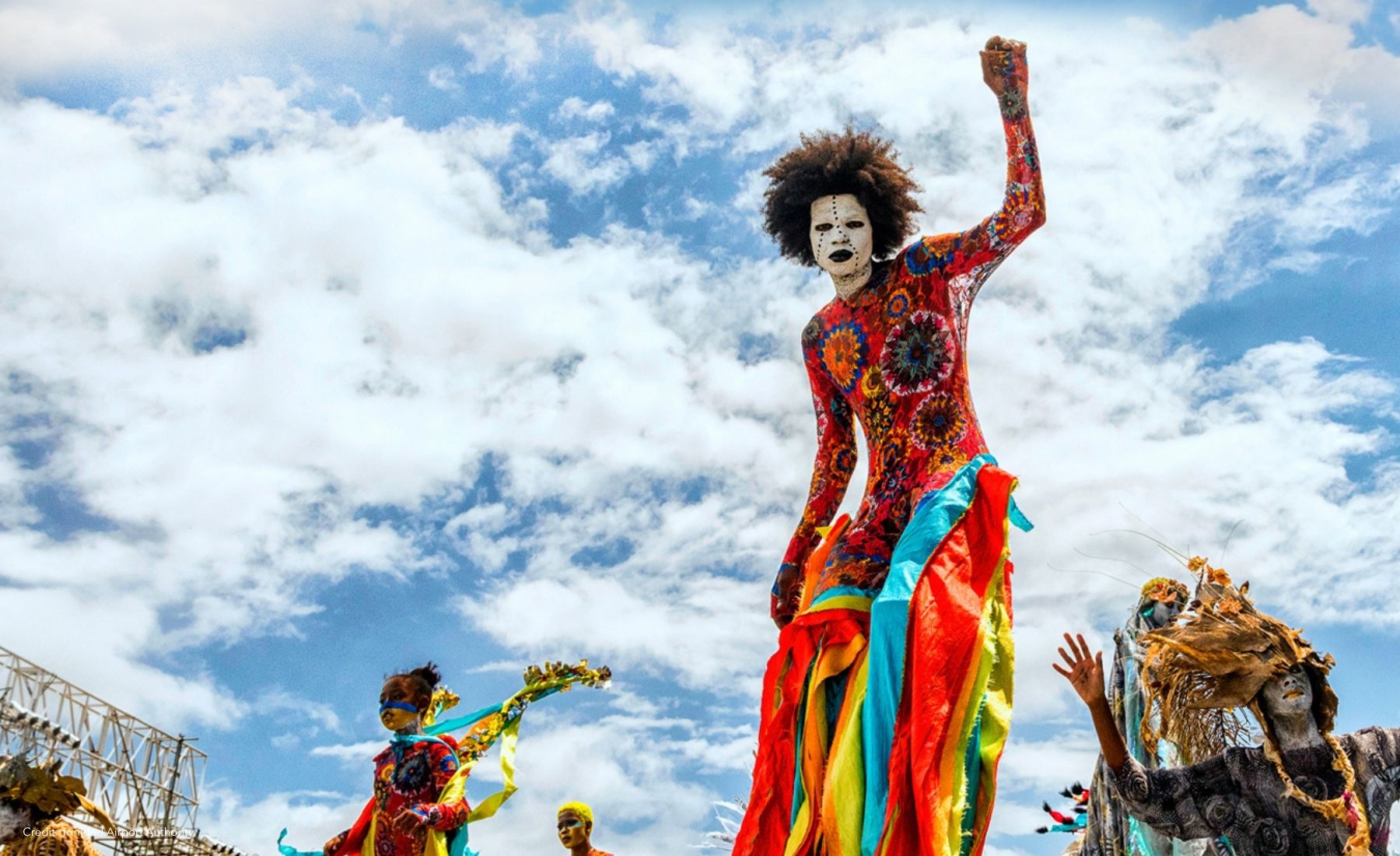
Trinidad Carnival is famous for soca, steelpan, elaborate costumes and streets filled with masqueraders. For two days each year, Port of Spain becomes the centre of one of OUR Caribbean’s biggest celebrations.
The spectacle is easy to see. The history behind it takes a little longer to discover.
Carnival in Trinidad took shape through French pre-Lenten masquerade and African cultural traditions preserved and reshaped by enslaved Africans and free people of African descent on the island. Music, masquerade, satire and street performance became expressions of identity, resistance, creativity and freedom.
That history still shapes the Carnival you see today
When Is Trinidad Carnival 2027?
The two main road days are:
Carnival Monday: February 8, 2027
Carnival Tuesday: February 9, 2027
Carnival season begins much earlier, with music releases, fetes, steelband rehearsals, competitions and cultural events building toward the final weekend
The detailed 2027 programme will be confirmed closer to Carnival, so travellers planning around a specific event should check the official schedule before finalising their plans.
Where Trinidad Carnival Began
Carnival first appeared in Trinidad during the late eighteenth century, when French settlers and planters brought pre-Lenten masquerade traditions to the island.
Enslaved Africans and free people of African descent were largely excluded from the masquerade balls of the planter class. But enslaved communities kept their own traditions of drumming, dance, storytelling, procession and performance alive.
Slavery was formally abolished in 1834, but a system called apprenticeship kept most formerly enslaved people tied to the estates until full emancipation on August 1, 1838. Once free, they brought their traditions into the streets, and Carnival began to change hands.
One of the traditions that emerged was Canboulay.
The name comes from the French cannes brûlées, meaning “burnt cane.” During slavery, when fire broke out in a cane field, enslaved workers from nearby estates were forced out, often at night, to put out the flames and save the crop. After emancipation, freed people turned that memory into something of their own: torchlit processions with drumming, chanting, stick fighting, masking and reenactment.
It became one of the foundations of modern Trinidad Carnival.
The Canboulay Riots
Carnival did not grow without a fight.
Colonial authorities tried to control Carnival during the nineteenth century, particularly drumming, stick fighting and torchlit street processions.
In 1881, police under Captain Arthur Baker moved to stop the Canboulay procession in Port of Spain. Revellers fought back. The confrontation became known as the Canboulay Riots.
Carnival continued, but restrictions changed the way people celebrated. In 1884, Canboulay processions were banned. New forms of music and performance developed as communities adapted.
That ability to reinvent traditions would become one of Carnival’s defining characteristics.
Today, the Canboulay Riots are reenacted before dawn on Carnival Friday in Port of Spain. If you arrive early in the week, it’s worth getting up for.
How Steelpan Became Part of the Story
Music changed alongside Carnival.
As colonial laws restricted drumming, performers turned to tamboo bamboo, creating rhythm with bamboo tubes cut to different lengths and struck against the ground.
Metal objects later became part of Carnival music. By the late 1930s, experimentation with discarded metal containers had produced the first steelpans, and the instrument kept developing through the 1940s and beyond.
Today, steelpan is the national instrument of Trinidad and Tobago, and Carnival season gives it its biggest stage.
At Panorama, large steel orchestras spend months preparing intricate arrangements before competing against one another.
Traditional Mas Still Tells the Story
Modern Carnival is often associated with feathers, beads and large costume bands, but traditional mas remains an important part of the celebration.
Characters such as the Midnight Robber, Moko Jumbie, Dame Lorraine and Blue Devils carry older forms of satire, storytelling and performance onto the streets.
Some carry their history in plain sight. Dame Lorraine began as a send-up of the French planter class, exaggerating the dress and manners of plantation society. Jab Molassie, the molasses devil, takes its name from the cane fields.
They look very different from modern mas bands, and that is exactly why they are worth noticing.
Carnival keeps changing, but these characters provide a visible connection to its past.
More Than Two Days on the Road
Carnival Monday and Tuesday may be the biggest days, but Trinidad Carnival makes much more sense once you know what came before them.
The music, costumes and street celebrations are connected to a history of enslavement and emancipation, survival, adaptation and creativity.
Later arrivals shaped it too. Indian, Chinese and Syrian-Lebanese communities all left their mark, from tassa drumming to chutney soca.
If you are travelling to Trinidad for Carnival 2027, give yourself time to experience more than the parade. Listen to steelpan, look for traditional mas and learn some of the stories behind what you see.
Then the road becomes much more than a party.
Planning your trip? Explore our Trinidad destination guide for more travel inspiration and useful information.